Adam Pendleton – Can I Be?

Opening: 19.04.2026, 12 – 5 pm

Langen Foundation is delighted to present Adam Pendleton: Can I Be?, a major solo exhibition that explores abstraction, language, and history—examining how these forces converge in unlikely and poetic ways.

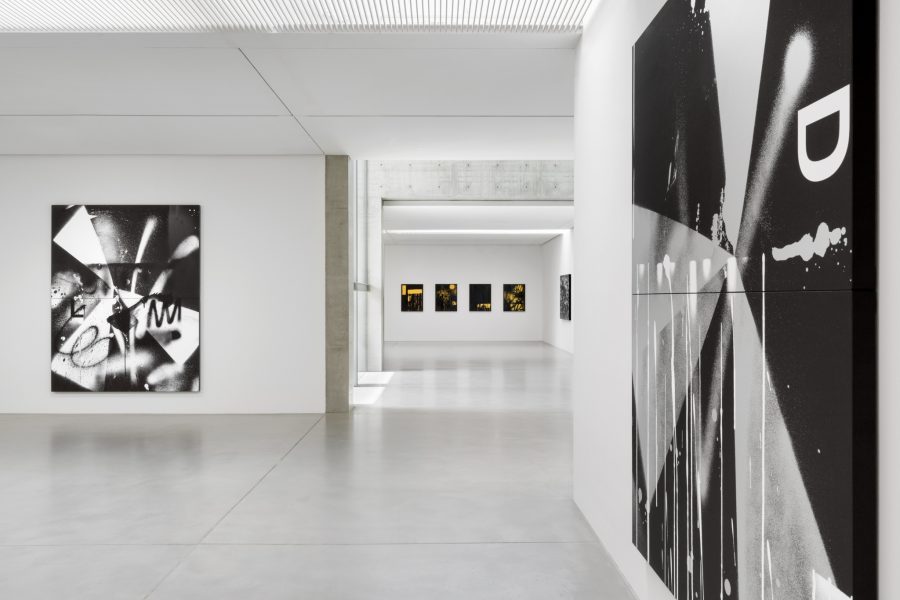
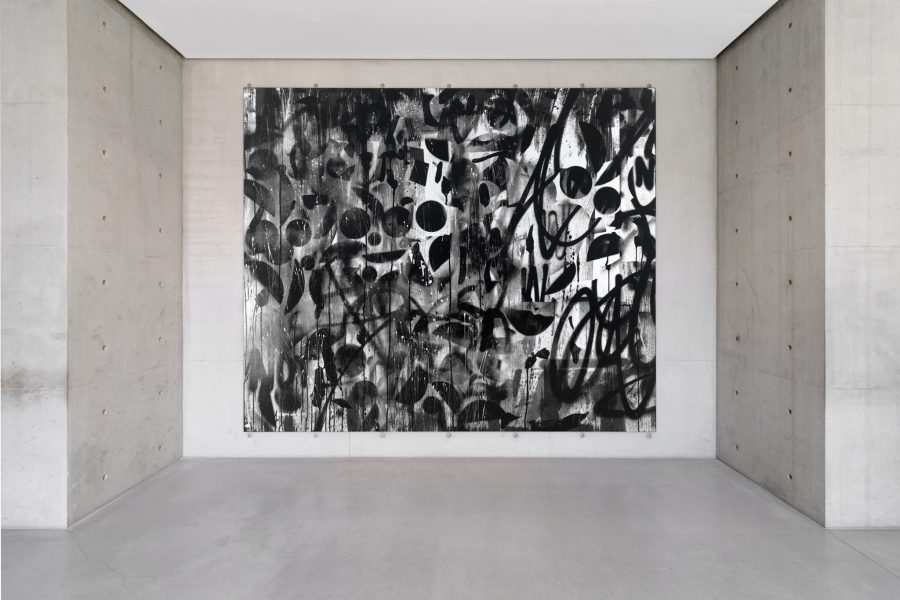
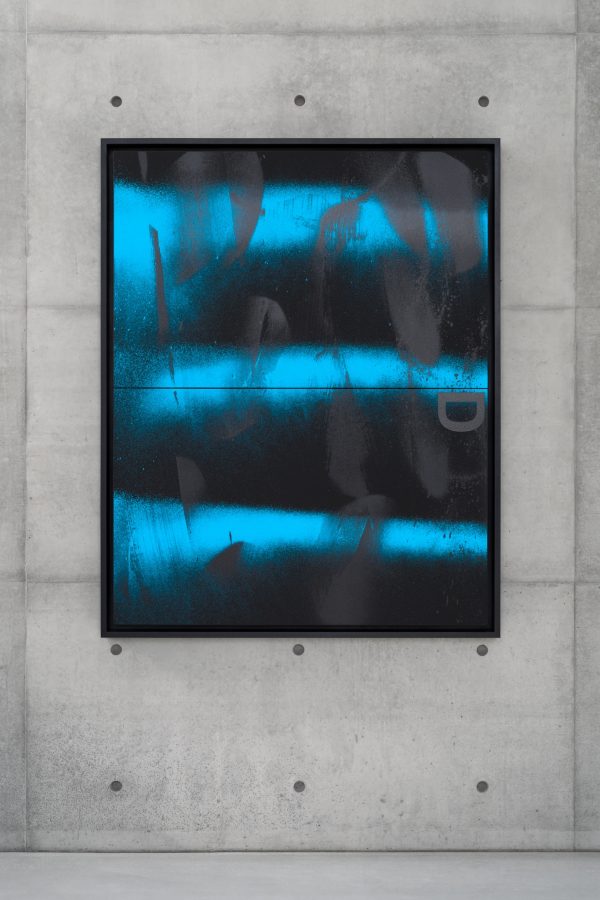
Pendleton, a central figure in contemporary American art, is known for paintings that have redefined the boundaries of abstraction. Upending linear compositional logic, his paintings are created through a distilled layering of gesture, fragment, and form. Each work comes to life through expressionistic flourishes, stark contrasts, and subtle uses of material, tone, and finish, combined with a precision reminiscent of Minimal and Conceptual art. In 2008, he began to define his working method as ‘Black Dada’—a critical framework for exploring the relationship between Blackness, abstraction, and the historical avant-gardes—for which he is now widely recognized.

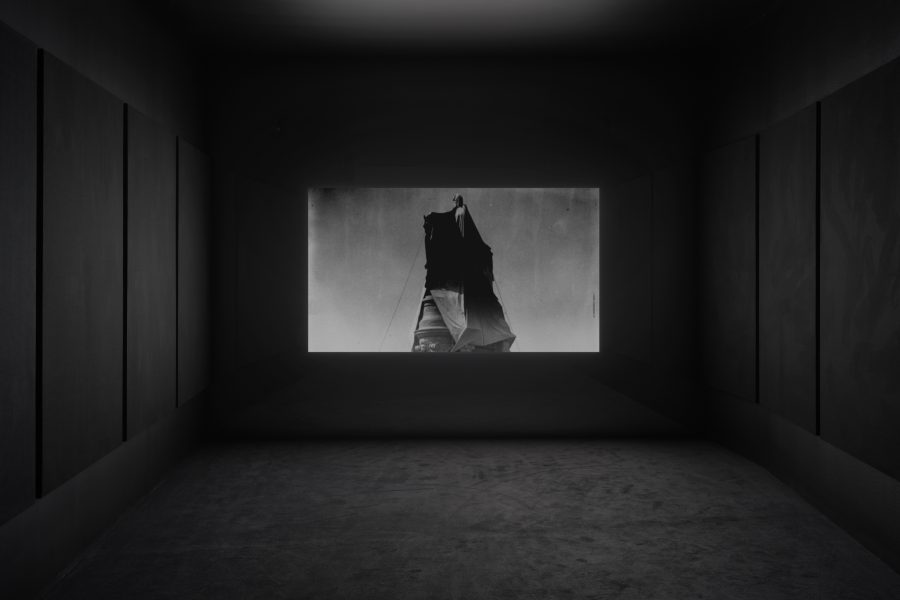
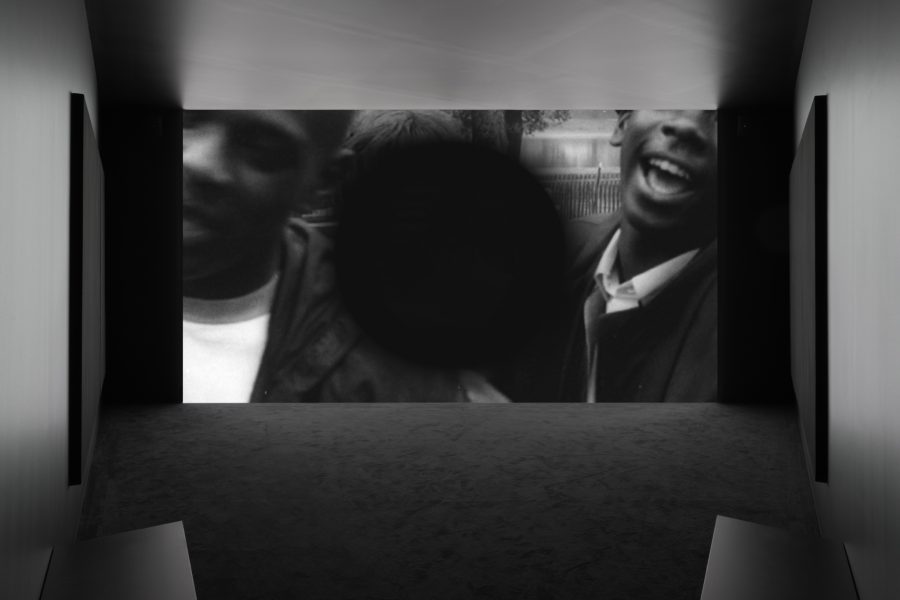
The exhibition opens with a monumental black pavilion containing Pendleton’s video work Toy Soldier (Notes on Robert E. Lee, Richmond, Virginia/Strobe) (2021–22). This work features the Robert E. Lee Monument, which stood in Richmond, Virginia—the former Confederate capital—for over 130 years before its removal in 2021. Through stroboscopic effects and fragmented imagery, the video breaks down the monument’s form, obscuring and inverting its presence on screen. The soundtrack interweaves poet Amiri Baraka’s staccato reading of Dope (1980) with Hahn Rowe’s score of strings, woodwinds, and percussion.

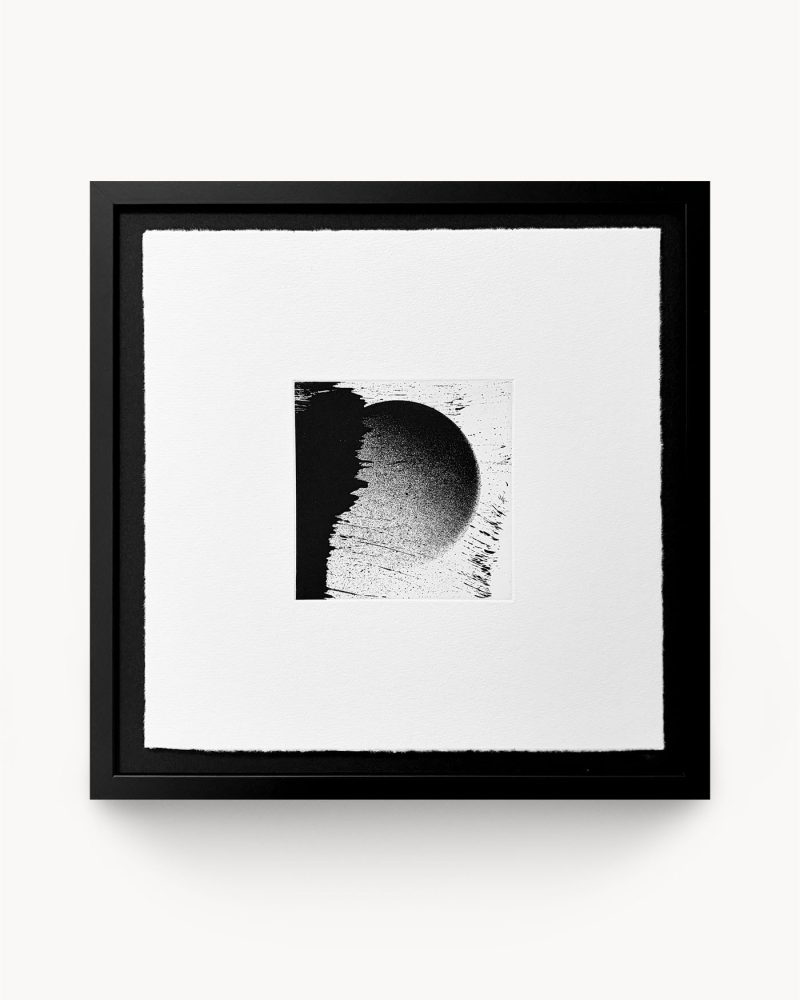
In contrast to the pavilion’s scale, Untitled (2026), a small black ceramic painting bearing three floating, silvery orbital forms, sets up a moment of intimate contemplation. Its restrained visual syntax invites heightened attention to space, volume, and form, setting a tone of concentration and perceptual awareness that defines the viewing experience throughout Can I Be?.

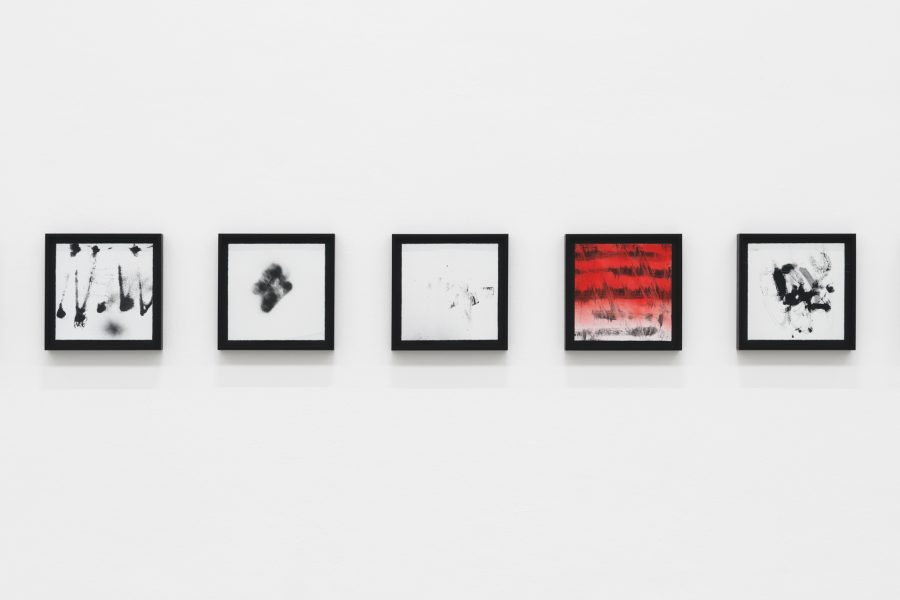
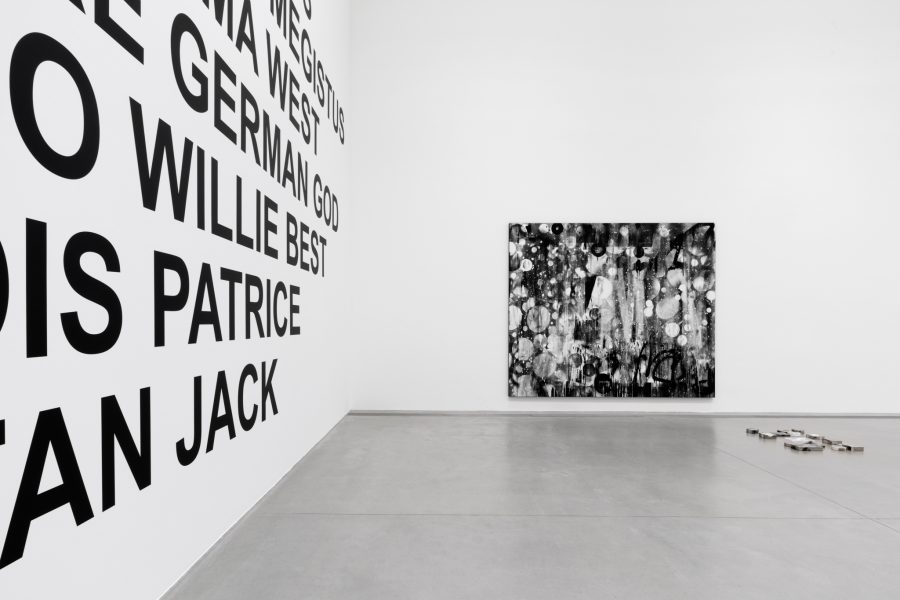
The exhibition includes a selection of paintings and drawings from Pendleton’s Black Dada and Days bodies of work that reveal the full range of the artist’s gestural and material investigations in painting. Pendleton’s works begin on paper with drips, splatters, sprays, geometric shapes, words and phrases, and inky fragments reminiscent of broken letters. Over time, these marks accumulate in the studio, documenting the temporal reality of the artist’s mark-making. The layered compositions are photographed and then translated onto black canvas through a screen-printing process. The resulting works emphasize process, translation, and transformation—treating painting not as a fixed object but as an evolving system of thought and action. 

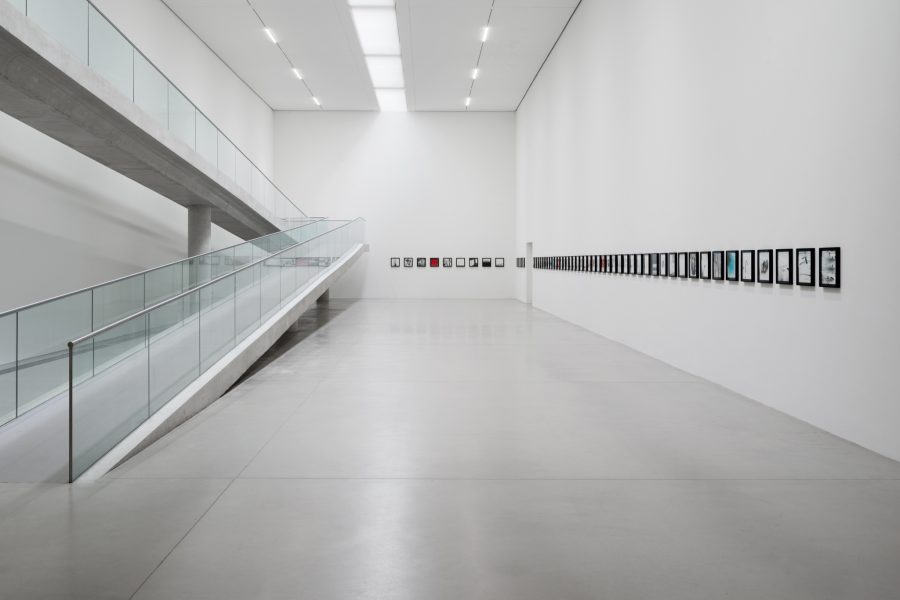
One of the building’s large rectangular volumes houses Pendleton’s most extensive presentation of Days drawings to date. Arranged as a continuous horizon line, the installation explores the possibilities of abstraction at a small yet intense scale. Subtle and generative, they balance visual play with rigor and restraint.

A triangular pavilion houses the video work Resurrection City Revisited (Who Owns Geometry Anyway?) (2024–25). Resurrection City was a peaceful, permitted encampment of 3,000 A-frame structures that occupied 16 acres between the Lincoln Memorial and the Washington Monument in Washington, DC, from May to June 1968. Conceived as the culmination of Martin Luther King Jr.’s Poor People’s Campaign, the temporary city drew national attention to entrenched economic and social inequities across racial and geographic lines. Pendleton’s video brings together archival documentation of Resurrection City with a recording of Amiri Baraka reading his poem I Love Music: For John Coltrane (1982). These historical elements are intercut and overlaid with abstract shapes and gestural moments that echo the formal and theoretical concerns of Pendleton’s paintings and Toy Soldier (Notes on Robert E. Lee, Richmond, Virginia/Strobe).

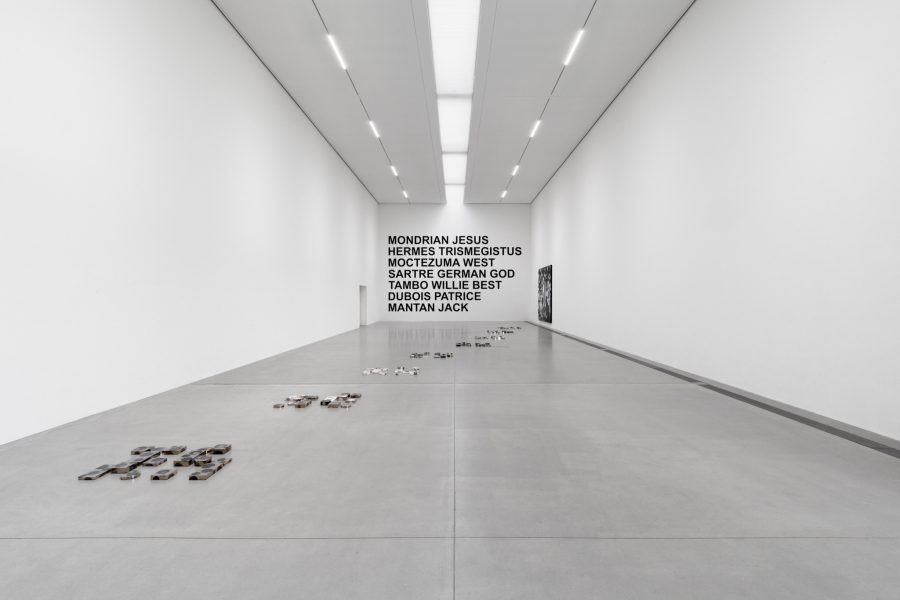
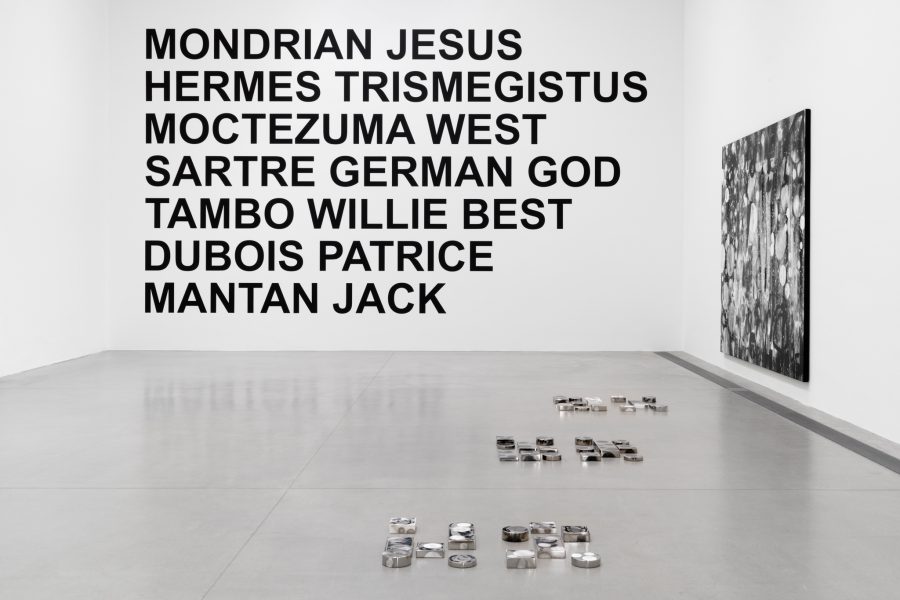
Pendleton’s engagement with language and abstraction extends into a group of eight floor-based ceramic sculptures derived from a loose visual interpretation of Morse code. Pushing this “universal” language toward abstraction, Pendleton treats code as both method and form. The painterly ceramic objects extend the exhibition’s exploration of translation—between language and signal, material and image—bringing the exhibition to a close through spatial intimacy, rhythm, and embodied presence.

Adam Pendleton: Can I Be? positions abstraction not as a retreat, but as an active, critical mode—one capable of holding history, politics, and perception in productive tension. In dialogue with Tadao Ando’s architecture, the exhibition unfolds as a sustained meditation on how form can think, remember, and reimagine the conditions of the present while casting powerful projections toward the future.

Adam Pendleton: Can I Be? is curated by Nadim Samman.

Adam Pendleton was born in Richmond, Virginia, in 1984. He has exhibited at major museums worldwide. Recent solo and group exhibitions include Adam Pendleton: Love, Queen, Hirshhorn Museum and Sculpture Garden, Smithsonian Institution, Washington, DC (2025–2027); Sweeter than Honey: A Panorama of Written Art, Pinakothek der Moderne, Munich (2025–26); Imagining Black Diasporas: 21st-Century Art and Poetics, Los Angeles County Museum of Art (2024–2025); Adam Pendleton: Blackness, White, and Light, mumok—Museum moderner Kunst Stiftung Ludwig Wien (2023–2024); Adam Pendleton: To Divide By, Mildred Lane Kemper Art Museum, St. Louis, MO (2023–2024); Whitney Biennial 2022: Quiet as It’s Kept, Whitney Museum of American Art, New York, NY (2022); Adam Pendleton: These Things We’ve Done Together, Montreal Museum of Fine Arts (2022); and Adam Pendleton: Who Is Queen?, Museum of Modern Art, New York, NY (2021–2022). 

Pendleton’s work is held in numerous public collections, including the Museum of Modern Art, New York; the Solomon R. Guggenheim Museum, New York; the Whitney Museum of American Art, New York; the Studio Museum in Harlem, New York; the Carnegie Museum of Art, Pittsburgh; the Museum of Contemporary Art Chicago; the Los Angeles County Museum of Art; the Museum of Contemporary Art San Diego; the Virginia Museum of Fine Arts, Richmond; the Montreal Museum of Fine Arts; the National Gallery of Canada, Ottawa; Tate, London; and the Pinakothek der Moderne, Munich. 

In 2024, he was honored with the Rosenthal Family Foundation Award for Painting from the American Academy of Arts and Letters.